
Sewer Lateral Inspection Before Selling a Home in San Mateo County
A sewer lateral can be out of sight for decades - until a home sale brings it into the transaction. In several San Mateo County cities, the owner must provide a sewer lateral inspection, video, test result, or compliance certificate before title transfers. In others, a certificate is not required at sale, but buyers may still ask for a camera inspection before removing contingencies.
That patchwork of local rules is why a sewer lateral inspection in San Mateo County should happen early. Waiting until the final week of escrow can turn a routine repair into a delayed closing, a price renegotiation, or an emergency replacement. A documented sewer camera inspection gives sellers, buyers, and agents a clear view of the line before decisions become expensive.
What is a sewer lateral?
The sewer lateral is the private pipe that carries wastewater from the building to the public sewer main. Depending on the city, the owner’s responsibility may extend all the way to the main, including the portion under the sidewalk or street.
This surprises many homeowners because the pipe is underground and connects to a public system. Yet a root blockage, separated joint, sagging section, or collapsed lateral is often the property owner’s responsibility. When the line fails, the symptoms can include repeated drain backups, sewage odors, soggy landscaping, or wastewater emerging from a cleanout.
Why point-of-sale sewer rules exist
Older laterals can allow rainwater and groundwater into the sanitary sewer system. During storms, that extra water can contribute to sewer overflows and put pressure on public treatment infrastructure. Point-of-sale programs identify defective private laterals when properties change hands, instead of leaving the problem for the next owner.
The details vary by city. Some require closed-circuit television video. Some require a witnessed test. Some apply only to buildings over a certain age. Some offer certificates that remain valid for several years after a passing inspection or full replacement.
Which San Mateo County cities require certificates at sale?
Local requirements can change, so sellers and buyers should confirm the current rule with the city before relying on a summary. As of the current research for this guide, the cities commonly identified as having point-of-sale sewer lateral programs include:
- San Mateo
- Burlingame
- Hillsborough
- San Bruno
- Millbrae
- Pacifica
- South San Francisco
Belmont, San Carlos, and Brisbane have historically used remodel or fixture-addition triggers rather than automatic sale requirements. Daly City has a different point-of-sale building record process and should not be assumed to require a sewer certificate. Redwood City requirements should be confirmed directly with the city before listing or writing an offer.
San Francisco is also different. The City and County of San Francisco does not have the same point-of-sale lateral certificate requirement as these San Mateo County cities, although the property owner is generally responsible for maintaining the lateral.
South San Francisco’s rule is especially important
South San Francisco adopted a point-of-sale sewer lateral inspection and correction ordinance in 2022. The city’s permitting page states that property owners must possess a Sewer Lateral Compliance Certificate before selling a home or property.
The ordinance discussion is also notable because it specifically mentions Orangeburg pipe. According to the city council report, Orangeburg was used for many sewer laterals built in the 1950s and 1960s, and its expected service life is far shorter than the age of those homes today.
For a seller in South San Francisco, this means the sewer lateral is not a minor disclosure item. It is part of the transaction checklist. If the property is in the area, working with experienced South San Francisco plumbers can help coordinate the camera inspection and any follow-up repairs before the certificate deadline becomes urgent.
San Bruno’s age-based trigger
San Bruno’s point-of-sale sewer lateral requirement applies to homes more than 50 years old. The city requires inspection and certification before the property is sold or the deed transfers.
The city’s FAQ also notes that the rule can apply to private sales and inter-family transfers, not only MLS listings. A camera inspection of the full lateral may be required as part of the compliance process. That is important for families transferring property between relatives who assume the rule applies only to traditional home sales.
Pacifica and other coastal considerations
Pacifica’s lateral program has been in place for years and requires compliance documentation before title transfer. Coastal properties can face additional complications from moisture, soil movement, mature trees, aging pipe materials, and difficult access. A clean video is useful even when a sale is not imminent because it documents the condition of the line before the next storm season.
Pacifica homeowners should not assume a recent drain cleaning equals compliance. Cleaning removes an obstruction; it does not certify the structural condition of the pipe.
What a sewer camera inspection shows
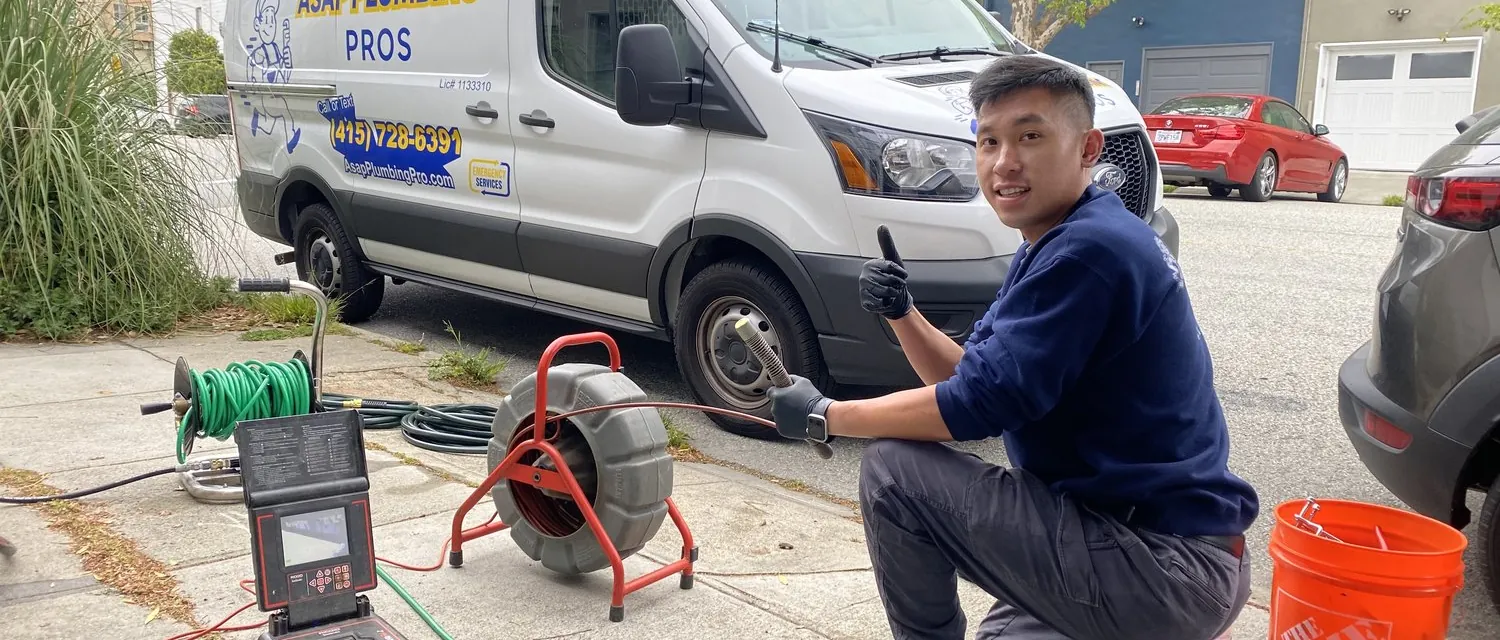
A sewer camera inspection is a visual evaluation of the inside of the lateral. A technician inserts a specialized camera through a cleanout or other access point and records the line from the building toward the public connection.
The video can reveal:
- Root intrusion at joints
- Cracked, broken, or offset pipe sections
- Bellied sections where water and solids collect
- Corrosion in cast iron
- Deformation or blistering in Orangeburg
- Grease, scale, or debris restricting flow
- Missing or damaged cleanouts
- Improper repairs or connections
- The approximate location and depth of a defect
A camera inspection is not just a sales document. It is a diagnostic tool that tells everyone whether the line needs cleaning, spot repair, lining, bursting, or full replacement.
Why cleaning may come before inspection
A camera cannot evaluate what it cannot see. Heavy grease, standing water, root masses, and debris can hide pipe damage or stop the camera entirely. In those cases, sewer cleaning service may be needed before the video can be completed.
For heavy root intrusion or scale, hydro jetting may be recommended. For a severely deformed or collapsed section, cleaning may be unsafe or ineffective. The right sequence depends on the pipe material, age, access, and condition visible in the first camera pass.
When to schedule the inspection
The best time for a seller is before the home goes on the market. Early inspection provides time to:
- Confirm whether a certificate is required
- Clean the line if the camera cannot pass
- Collect repair bids without escrow pressure
- Complete permitted work before listing photography and disclosures
- Price the home with known sewer conditions
- Provide buyers with documentation upfront
The best time for a buyer is during the inspection contingency period, especially if the home is older than 50 years, has mature trees, has a history of backups, or sits in a city without a point-of-sale certificate requirement.
Waiting until the final days before closing creates bad options. If a defect appears late, the parties may need an extension, credit, escrow holdback, or rushed repair decision.
What happens if the lateral fails?
A failed inspection does not automatically mean the entire line needs replacement. The video may show a localized crack, root intrusion at one joint, or a short belly that can be evaluated for a targeted repair. In other cases, multiple defects, collapsed pipe, or deteriorated Orangeburg may make full replacement the more practical option.
Depending on the condition, solutions may include:
- Cleaning and descaling
- Root removal
- Spot repair
- Cured-in-place pipe lining
- Pipe bursting
- Traditional excavation
- Cleanout installation or access correction
- Full sewer line repair and replacement
For properties in the city, sewer line service in San Mateo can help homeowners move from diagnosis to a code-conscious repair plan.
How sellers can make the process smoother
A seller can reduce friction by keeping the process organized:
- Confirm the city and sewer district serving the property.
- Ask whether a point-of-sale certificate is required.
- Check the age of the home and any prior sewer work.
- Locate existing cleanouts.
- Schedule the camera inspection before listing.
- Keep the video, invoice, report, and permit records together.
- Disclose known defects and completed repairs accurately.
- Coordinate with the agent before escrow deadlines are set.
If the lateral was recently replaced, find the permit signoff and warranty information. A documented replacement may change the inspection or certificate timeline in some jurisdictions.
How buyers should read the results
Buyers should ask for the actual video, not only a one-line summary. Watch for the camera’s location markers, pipe material, standing water, roots, offsets, and sections the camera could not pass. If the video stops halfway, the inspection may be incomplete.
A buyer should also ask:
- Was the full lateral inspected from the building to the main?
- Was the line cleaned before the camera passed?
- Are defects measured and located?
- Does the report distinguish structural defects from maintenance issues?
- Are permits required for the proposed repair?
- Is the quote for cleaning, repair, lining, or replacement?
A cheap cleaning quote is not equivalent to a repair quote. A full replacement estimate is also not proof that replacement is necessary. The video and report should drive the decision.
Sewer lateral inspection FAQ
Does every San Mateo County home need a sewer certificate before sale?
No. Requirements vary by city and can depend on the age of the building, type of transfer, remodel value, shared lateral status, and other factors. Confirm the rule with the city before relying on a general list.
Is a sewer camera inspection the same as a compliance certificate?
No. A camera inspection documents the condition of the line. A compliance certificate is issued under a city or district process after the required inspection, test, repairs, and paperwork are accepted.
Can I sell a home with a failed sewer lateral?
The answer depends on the city and the transaction. In a point-of-sale jurisdiction, repairs or an approved arrangement may be required before the certificate is issued. Buyers and sellers should coordinate with the city, agents, and escrow early.
How long does a sewer camera inspection take?
Many inspections can be completed in one visit if there is accessible cleanout access and the line is clear enough for the camera to pass. Heavy roots, debris, or standing water may require cleaning first.
Should I inspect the lateral if my city does not require it?
For an older home, yes. The absence of a certificate requirement does not mean the pipe is in good condition. A camera inspection is a relatively small cost compared with an unexpected sewer replacement after closing.
Plan the inspection before escrow pressure starts
Sewer lateral rules are local, specific, and easy to misunderstand. The safest approach is to verify the property’s city requirements, schedule the camera work early, and keep the video and repair documentation organized.
ASAP Plumbing Pros provides sewer camera inspections, cleaning, repair, and replacement support across San Francisco and San Mateo County. Schedule an inspection before listing, before removing contingencies, or before a lateral problem becomes a last-minute closing delay.

Need plumbing service?
Request service online or call our team for installation, repair, and maintenance.
Ready when you are
Plumbing emergency? We're on the way.
Call (415) 728-6391 or request service online — 24/7, every day of the year.